
As an Indian student studying or planning to study in France, the transition from academia to landing your first job can feel like a daunting process. One of the key steps is crafting a strong CV, but if you’ve ever wondered why your “ATS-verified” resume isn’t getting you the calls or interviews you expected, you’re not alone.
In fact, if there’s one message that floods inboxes from job seekers, it’s this:
“My resume is ATS-verified, but I’m still getting rejected!”
Sound familiar? Let’s set the record straight — there’s NO SUCH THING as an “ATS-verified” resume that guarantees success. Whether you’re in France or any other part of the world, what truly matters for your CV goes beyond templates and buzzwords.
Let’s break down how you can craft a CV that aligns with the expectations of French employers while keeping in mind your unique profile as an Indian student.
What Really Matters on Your CV?
A strong CV is a direct reflection of how well your background aligns with the role you’re applying for.
While many are under the impression that an ATS (Applicant Tracking System) can make or break their job search, that’s only part of the equation. If you’re applying in France, your CV should typically be in French unless stated otherwise. If you’re not fluent, consider having it professionally translated to ensure accuracy and professionalism.
Let’s focus on the factors that truly matter:
- Your Experience
It’s not just about listing every job or internship you’ve ever held. What recruiters care about is how relevant your experience is to the job in question. Highlight experiences that demonstrate transferable skills, problem-solving abilities, and your adaptability to a new working environment. If you’ve studied in France, this international exposure could also work in your favour. - Knockout Questions
Before your CV is even considered, you may have to pass some initial screening questions. These questions assess whether you meet certain non-negotiable criteria, such as required qualifications, work eligibility (i.e., visa status), or language proficiency. Make sure to answer these knockout questions carefully. - Location
Not every company in France offers remote work or visa sponsorship. Employers might prioritise candidates who are local or have the legal right to work in France. As an Indian student on a student visa, research companies that are open to sponsoring work permits or offering contracts that can convert to post-study work visas.
The Truth About ATS (Applicant Tracking System)
Many job seekers are sold on the idea of “ATS-verified” resumes, believing they are guaranteed to bypass the screening process. The reality? ATS optimisation is often overrated. While it’s important to ensure your CV is readable by an ATS, the system won’t automatically guarantee your resume lands on a recruiter’s desk.
ATS is designed to scan CVs for keywords related to the job description, but these systems are not foolproof. A beautifully designed resume with intricate graphics might be unreadable by an ATS, but the same could also happen to a CV stuffed with irrelevant keywords in an attempt to beat the system.
Focus on clarity and relevance. Use straightforward formatting, clean bullet points, and tailor your CV to the specific job description.
Indian vs. French CV: Key Differences
To succeed in the French job market, it’s important to understand how CV formats differ between India and France. Below is a quick comparison of the key differences:
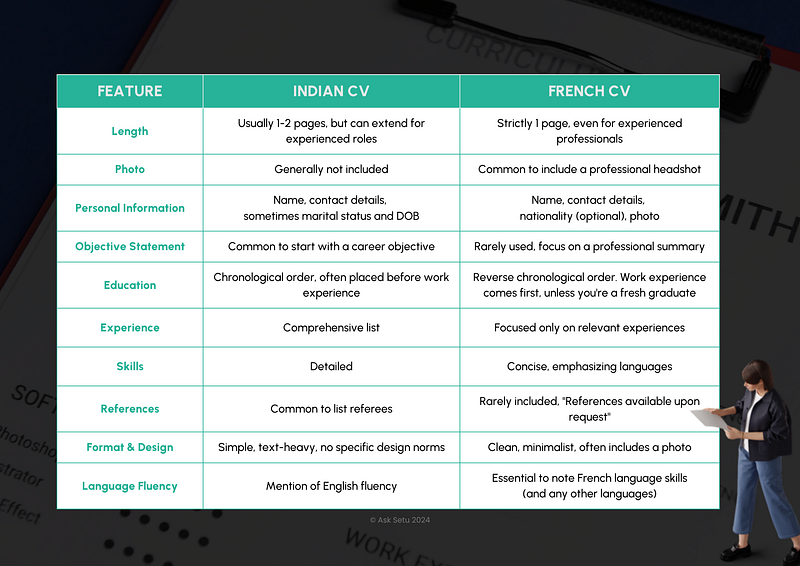
As you can see, French CVs tend to be more concise, visually clean, and are expected to include a professional photo. Indian students adapting to this format should focus on keeping it to one page and ensuring their French language skills, if any, are highlighted.
What to Focus On Instead of Fancy Templates
Rather than getting caught up in templates or elaborate designs, here’s what will really help you stand out:
- Networking
Having a well-crafted CV is just part of the process. Networking plays a huge role in the French job market. Attend industry events, make connections with professionals, and seek mentorship from alumni or other Indian students who have successfully transitioned into the French workforce. These connections can help you get a foot in the door, even before your CV is reviewed. - Building a Compelling LinkedIn Profile
Your LinkedIn profile is your digital resume, and it’s often the first place recruiters look after scanning your CV. Make sure your LinkedIn profile goes beyond just job titles — add descriptions of your roles, highlight key projects, and share content that reflects your professional interests. A strong LinkedIn profile can be the difference between getting noticed or getting overlooked. - Informational Interviews
Don’t wait for job openings to be posted. Reach out to professionals working in your field and request informational interviews. These conversations can give you insights into the French job market and help you tailor your CV and job applications accordingly. - Creating a Personal Brand
In today’s competitive job market, having a personal brand can set you apart. Whether through LinkedIn posts, a personal blog, or a portfolio, showcase what makes you unique. Your personal brand should communicate your skills, values, and the impact you can bring to a company.
Rejections Aren’t Always Personal
It’s important to remember that rejection is part of the process, and it’s not always about your qualifications. There are many factors that can influence hiring decisions, including timing, internal candidates, and company priorities.
Stay persistent, continue refining your CV, and leverage your network. As an Indian student in France, you have a unique background that can be your biggest asset — embrace it! By focusing on relevance, clarity, and building your personal brand, you’ll position yourself as a strong candidate in the French job market. There’s no magic formula, but by crafting a thoughtful, well-researched CV and connecting with the right people, you’re already on the path to success.
Whether you’re just starting to explore the idea of studying in France or you’re ready to make the leap into the French job market, Sétu aims to be your trusted companion throughout the journey. Contact us for early access to the platform & get ready to conquer the French job market: https://www.asksetu.com/


 Ask Sétu Blog
Leave a comment