
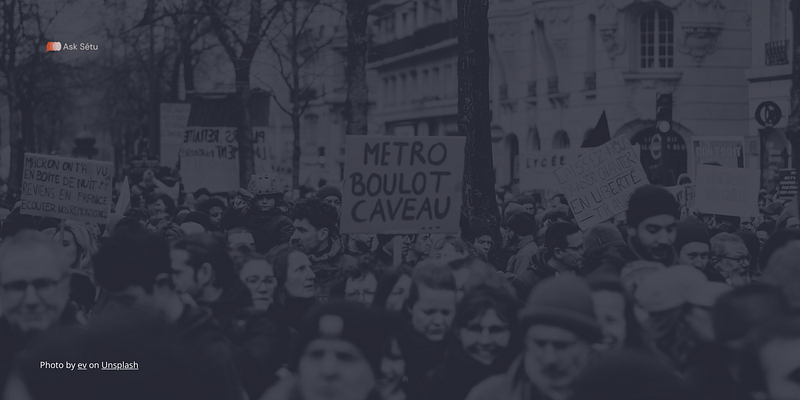
When you first arrive in France as an international student, it doesn’t take long before you hear the word “grève” (strike). You may encounter train delays, metro closures, or even university classes being canceled because of one. For many newcomers, these disruptions seem like obstacles to be avoided, or a day off to rest at home & catch up on that long list of pending tasks. But strikes in France are a part of the social DNA.
In September 2025, France is gearing up for one of the most significant protest movements in recent years. The grassroots “Bloquons tout” (Block Everything) collective has rallied against the Bayrou government’s austerity measures — including a €44 billion budget cut, abolition of public holidays, pension freezes, and hospital funding reductions. Massive mobilisations are expected on September 10 and September 18, disrupting transport, schools, hospitals, and even pharmacies.
For international students, arriving in France this isn’t just a day with logistical challenges. It’s a powerful cultural lesson.
🛑 Strikes are not chaos, they’re communication
In many countries, strikes are rare, heavily restricted, or viewed as acts of conflict. In France, however, striking is a protected constitutional right (since 1946) and deeply rooted in history — from medieval printers in Lyon to the legendary student-worker strikes of May 1968.
⚡ In French culture, a strike is not “the system breaking down” but “the system speaking up.”
This perspective shift is vital. Rather than dismissing strikes as disruptive, recognising them as legitimate social dialogue helps you better navigate French society.
🚇 What it means for your daily life as a student
Strikes will inevitably affect your routine, especially in Paris and other major cities. On strike days, you might face:
- 🚆 Canceled or delayed trains (SNCF, RER, Transilien)
- 🚇 Reduced or limited metro or bus services
- 🏥 Hospitals and public offices on skeleton staff
- 🎓 Cancelled and postponed classes if professors or admin staff join the strike
For many French students, this is normal and expected. For international students, the key is preparedness and perspective. Download apps like SNCF Connect or RATP, keep a flexible mindset, and embrace teleworking or cycling when needed.
🌍 Intercultural takeaway: respect the role of protest
Understanding strikes in France isn’t just about managing missed trains. It’s about integrating into French society. Strikes are tied to values of solidarity, collective action, and resistance to perceived injustice.
⚡ To thrive in France, international students should adapt not just to the language, but also to the rhythm of its social movements.
Learning to discuss these issues with French peers, asking questions, and showing curiosity instead of frustration helps you connect more deeply. What may feel like disorder at first is, in fact, democracy in action.
Don’t just endure, engage
Strikes can be inconvenient, but for international students, they’re also a classroom outside the classroom. By acknowledging their importance, you demonstrate cultural sensitivity and openness – qualities that will enrich both your student experience and your career in France.
✅ Strikes in France are not just disruptions. They are lessons in culture, history, and democracy. Acknowledge them, prepare for them, and let them deepen your understanding of what it means to live and study in France.
So the next time you’re stuck on a platform because of a grève, resist the urge to complain. Instead, ask yourself: what does this say about how France sees power, people, and protest? That question may be just as valuable as anything you learn in your lectures.
At Ask Sétu, we help Indian students in France go beyond the classroom — from navigating cultural norms like la grève to preparing CVs, finding scholarships, and adapting to the French job market. Explore our free guides, resources, and student stories at asksetu.com and make your journey in France smoother, smarter, and more rewarding.

 Ask Sétu Blog
Leave a comment