
Applying for a Master’s degree in France is an exciting endeavour that requires careful preparation, particularly when crafting your motivation letter. This document is a critical component of your application, offering a platform to showcase your academic journey, professional aspirations, and the alignment between your goals and the chosen program.
What is a Motivation Letter?
A motivation letter, often referred to as a statement of purpose, is your personal narrative that accompanies your application. It’s an opportunity to articulate why you’re interested in the specific Master’s program, how your background prepares you for it, and what you aim to achieve upon completion. Unlike a CV, which lists your accomplishments, the motivation letter delves into the motivations behind your academic and professional choices.
Structuring Your Motivation Letter
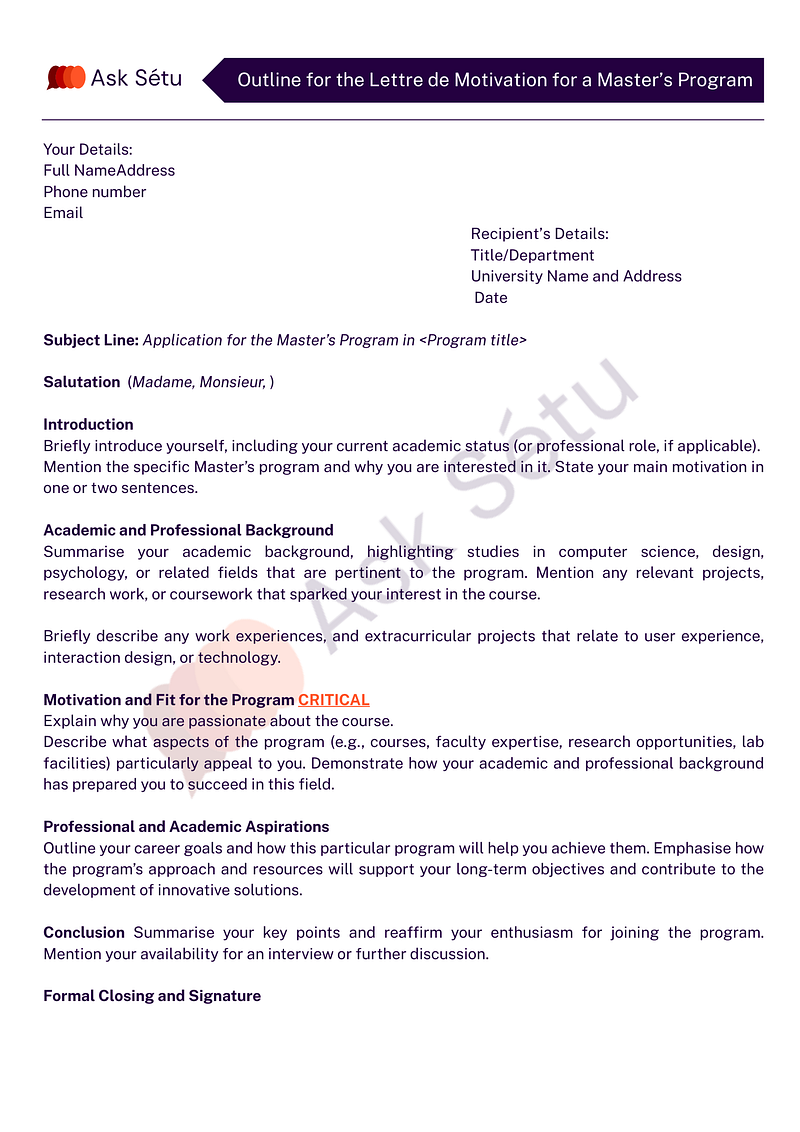
A well-organised motivation letter typically follows a clear structure:
Introduction
Begin with a brief introduction of yourself and state the purpose of the letter. Mention the specific Master’s program and institution you’re applying to.
Academic Background
Outline your educational history, highlighting relevant coursework, projects, or research that have prepared you for the Master’s program.
Professional Experience
If applicable, discuss internships, jobs, or volunteer work that have provided you with skills pertinent to the program.
Motivation and Fit
Explain why you’re interested in this particular program and institution. Reference specific courses, faculty members, research opportunities, or institutional values that resonate with your goals.
Career Objectives
Detail your short-term and long-term career aspirations and how the Master’s program will facilitate achieving them.
Conclusion
Summarise your enthusiasm for the program and express your readiness to contribute to the academic community.
Key Considerations for Crafting Your Letter
Personalisation
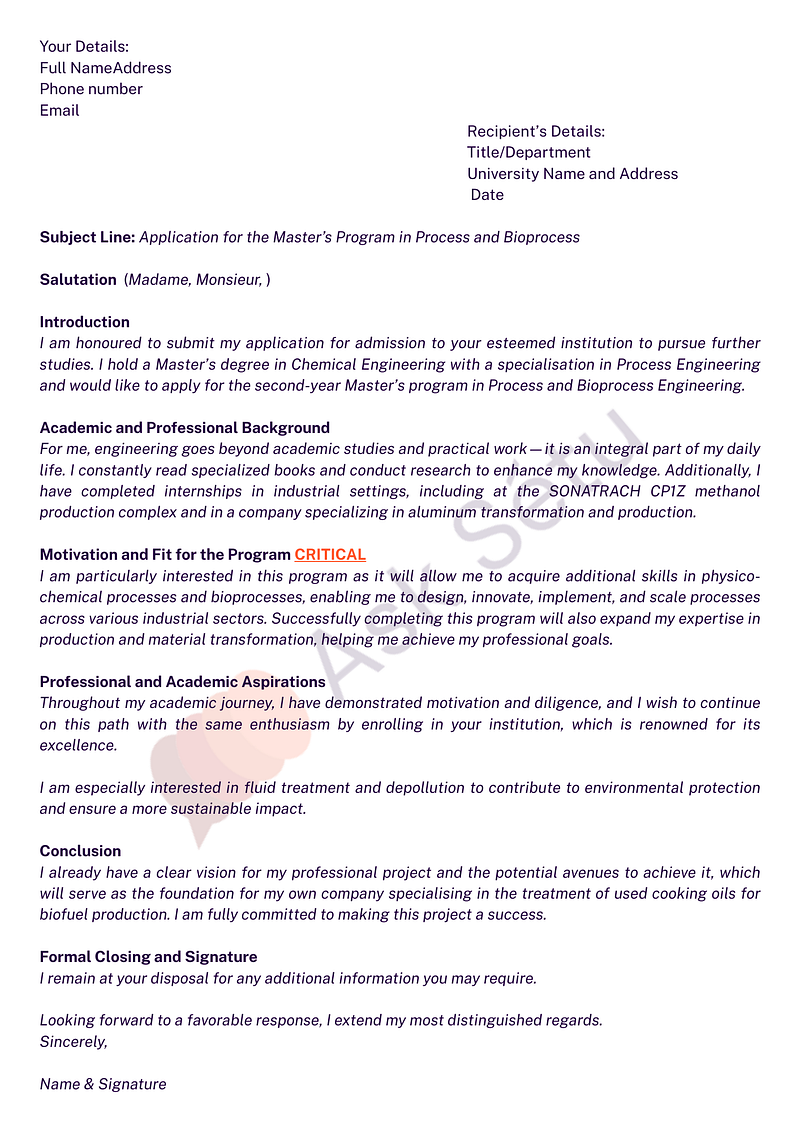
Tailor each motivation letter to the specific program and institution. Generic letters are easily spotted and may diminish your chances of admission.
Clarity and Conciseness
Be clear and to the point. Admissions committees appreciate well-articulated letters that convey your message without unnecessary verbosity.
Authenticity
Be genuine in your writing. Share your true motivations and experiences rather than what you think the committee wants to hear.
Proofreading
Ensure your letter is free from grammatical errors and typos. Consider having someone else review it before submission.
Additional Tips for Business School Applicants
Applying to a business school in France entails additional considerations:
Highlight Leadership and Teamwork
Business programs value leadership potential and the ability to work collaboratively. Provide examples from your experiences that demonstrate these qualities.
Quantify Achievements
Where possible, use metrics to showcase your accomplishments (e.g., “Led a team of 5 to increase sales by 20% over six months”).
Discuss International Exposure
French business schools often have a global focus. Mention any international experiences or cross-cultural competencies you’ve gained.
Align with School Values
Research the business school’s mission and values. Articulate how your personal values and career goals align with them.
Your motivation letter is a critical component of your Master’s application in France. It provides a window into your aspirations, qualifications, and fit for the program.
By thoughtfully crafting your letter, personalising it to each institution, and highlighting experiences relevant to your chosen field, especially for business school applications, you enhance your prospects of admission. Authenticity and clarity are key; let your genuine enthusiasm and preparedness shine through your words.
Ask Sétu offers personalised assistance in selecting the right university, understanding funding options, and navigating the entire process of studying and working in France. By signing up for Ask Sétu’s comprehensive packages, you’ll gain access to tailored guidance that simplifies your path to success in France.

 Ask Sétu Blog
Leave a comment