

Choosing where to pursue a business education in France can be a daunting task, especially for international students unfamiliar with the country’s unique higher education system. Among the many options, two main paths stand out: IAE (Instituts d’Administration des Entreprises), often referred to as university business schools, and Grandes Écoles de Commerce (prestigious private business schools). While both provide high-quality education, their structures, degrees, costs, and career prospects differ significantly. Understanding these differences can help students make an informed decision based on their academic goals, budget, and long-term career aspirations.
France’s higher education landscape is unique, with Grandes Écoles often regarded as the pinnacle of business education due to their selectivity and strong industry ties. However, IAE schools, affiliated with public universities, offer a high-quality and cost-effective alternative, particularly for students prioritising affordability and academic rigour over branding.
For international students, the distinction is crucial. Beyond academic quality, factors such as tuition fees, job market recognition, and post-study work opportunities influence the choice. With global competition in business education growing, it’s essential to know how these institutions compare in accreditation, networking opportunities, and employment outcomes.
Key Differences Between IAE and Business Schools
1️⃣ Status & Affiliation
- IAE: Public business schools affiliated with universities, and offer degrees that follow the French national education system.
- Grandes Écoles: Highly selective private institutions with independent governance, often ranking among Europe’s top business schools.
2️⃣ Admission Process
- IAE: Competitive but more accessible than Grandes Écoles. Some require entrance exams like the Score IAE Message (SIM), while others evaluate applications based on academic background.
- Grandes Écoles: Rigorous selection process, usually through prépas (preparatory classes) and competitive exams, or direct admission for master’s programs.
3️⃣ Cost of Education
- IAE: Lower tuition fees, making them a more accessible option for international students.
- Grandes Écoles: High tuition fees, but with access to extensive alumni networks and corporate partnerships.
4️⃣ Accreditation & Recognition
- Grandes Écoles: Many hold prestigious international accreditations such as EQUIS, AACSB, and AMBA, which enhance global recognition.
- IAE: While reputable in France, they generally do not have the same level of international accreditation as Grandes Écoles, though some may have AACSB recognition.
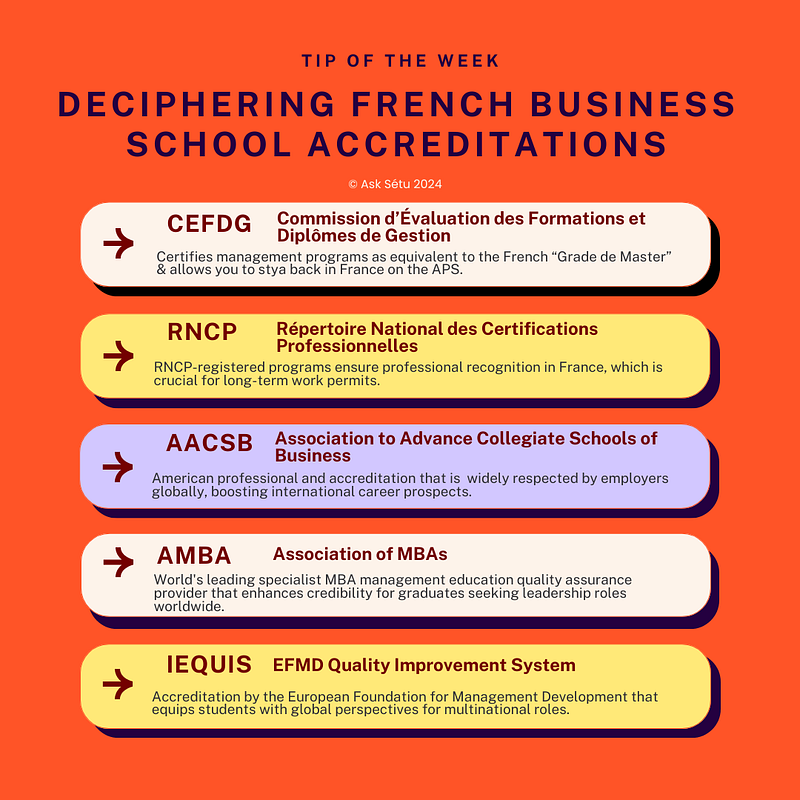
5️⃣ RNCP Certification & Degree Recognition
The RNCP (Répertoire National des Certifications Professionnelles) is an important certification in France that ensures degrees are professionally recognised.
- Grandes Écoles: Many programs are RNCP-certified, which facilitates easier access to work permits and job opportunities in France.
- IAE: Since they are part of public universities, their degrees are automatically recognised by the French Ministry of Higher Education, but not all programs have the RNCP certification, which may affect job prospects in regulated industries.
6️⃣ International Exposure & Networking
- IAE: International exchange programs exist but may be more limited compared to top-ranked business schools.
- Grandes Écoles: Strong international presence with global exchange programs, double degrees, and corporate partnerships.
Career Prospects for International Students
Landing a job in France after graduation depends on multiple factors, including the chosen institution, work experience, and French language proficiency. Here’s how the two compare:
- IAE Graduates: Gain solid academic training but may face challenges in networking, as IAE alumni networks are smaller compared to Grandes Écoles.
- Grandes Écoles Graduates: Benefit from strong alumni connections and career services, making job placement easier, particularly in sectors like consulting, finance, and luxury management.
Whether you graduate from an IAE or a Grande École, as an international student, you need a good level of French, and excellent networking skills to secure a job in France.
Both IAE and Grandes Écoles provide excellent business education, but they cater to different needs. If affordability and a recognized university degree are priorities, IAE is a great choice. However, for those seeking an elite network, global mobility, and high-profile job placements, Grandes Écoles offer a clear advantage. International students should weigh these factors carefully to choose the path that aligns best with their career goals.


 Ask Sétu Blog
Leave a comment