
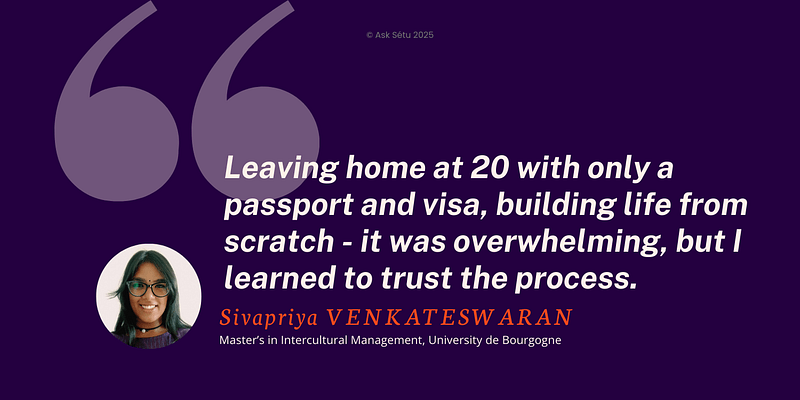
Studying abroad is a life-changing experience, but it comes with its share of challenges. Sivapriya VENKATESWARAN, a Master’s student in Intercultural Management at Université de Bourgogne, shares her story of moving to France, adapting to a new culture, and building a life from scratch.
What motivated you to study in France?
I completed my Bachelor’s in Foreign Languages and Intercultural Studies, where I reached a B1 level in French. I wanted to practice the language in an authentic setting and fully immerse myself in French culture.
While choosing a country for my Master’s, I had a clear checklist:
1️⃣ Field of Study — It had to be related to Intercultural Studies or Tourism.
2️⃣ Public University — I wanted an economical option, and public universities in France are much more affordable than private ones.
3️⃣ Location — I preferred a suburban city that offered a calm environment and lower cost of living.
France checked all the boxes, making it my ideal choice!
What advice would you give to students considering France?
1️⃣ Keep your priorities clear:
Just because others are moving to France doesn’t mean you should too. If you’re deeply attached to your home country, remind yourself: “I will come back soon. My culture isn’t going anywhere.” If your goal is financial stability or career growth, tell yourself: “I am here to earn and build a future.”
2️⃣ Trust the process:
It takes time to adjust, but things do get better. Every challenge is a learning opportunity, and you grow through the experience.
3️⃣ Plan practically:
Consider factors like cost of living, university reputation, and location before making a decision. If you’re on a budget, look at public universities and suburban cities for affordability.
Which brings us to our next question : how are you managing finances for your studies?
My family is financing my studies, which has been a great support system for me. For students considering France, it’s important to plan financials early. France has an excellent network of public universities that offer quality education and are more affordable than their counterparts in the US, UK, Canada and Australia, but the expenses are still an important factor for Indians. Look for scholarships, part-time job opportunities, and affordable accommodation options.
What was the hardest part about moving abroad?
Even though I had studied French and was familiar with the culture, the emotional transition was tough. I had no closure, no sense of familiarity. I was suddenly responsible for everything, and it felt like I had left my childlike self behind to step into the world of adulthood.
As a 20-year-old girl leaving behind her home, culture, and language, traveling abroad with only a passport and visa as her identity and building everything from scratch — cooking for the first time, getting a SIM card, opening a bank account, handling insurance, and managing other ‘adulting duties’ — was overwhelming.
Any final thoughts on studying in France?
Moving abroad is as much an emotional journey as it is an academic one. You leave behind your comfort zone, but in return, you gain independence, resilience, and a new perspective on life.
It takes time, but it gets better. Trust the process.
At the end of the day, knowing why you are here keeps you motivated. Whether it’s career growth, personal development, or a love for French culture, staying focused on your purpose will help you navigate the challenges.
Moving abroad for studies is more than just academics — it’s about adapting to a new lifestyle, overcoming challenges, and making the most of your experience. France offers incredible opportunities, but the transition can feel overwhelming without the right support.
From helping you navigate documents, visa applications, and housing options to setting up a bank account and offering intercultural workshops, Ask Sétu provides comprehensive support to make your move to France smoother and stress-free.

 Ask Sétu Blog
Leave a comment