

The transition between years often feels symbolic—a moment of reflection followed by resolution. But if your journey is connected to France—whether you’re preparing to apply for higher education or already in the midst of studies, internships, or job applications—then 2026 is less about abstract resolutions and more about purposeful, practical steps.
France is not just a destination. It’s a system with its own timelines, expectations, and culture. Navigating it well opens doors. Missing key structural realities can cost you months of waiting, stress, or even lost opportunities.
This bucket list distills lessons from thousands of students’ experiences. Each item is not just “nice to do” but rooted in what actually helps students progress—whether you’re aiming for an admit letter, an internship, a first job, or a longer-term career plan.
1. Get Clear on Why France Fits Into Your Long-Term Plan
It may sound philosophical, but clarity about why you’ve chosen France matters more than you think. When you’re working through admissions, interviews, or paperwork, you’ll be asked (by yourself and others): Why this course? Why this city? Why this company?
A clear, personal rationale helps to refine your applications and statements of purpose, guides which programs, employers, and cities are the best fit, and keeps you grounded when navigating setbacks
Ask yourself and write down your answers to:
- What skills or experiences do I want from this phase?
- What outcomes matter most (work experience, permanent residency, specific industry exposure)?
- How does France uniquely support these goals?
This can become your north star for decisions throughout the year.
2. Choose Courses, Roles, and Skills With Strategic Intent
For aspiring students, France has thousands of programs across public universities, Grandes Écoles, and private institutions. Not all of them align equally with your career plan.
Rather than compiling a long list of institutions, focus on:
- Curriculum relevance to your goals
- Language of instruction
- Internship integration
- Alumni outcomes and industry ties
For students already in France, the equivalent question is role fit. When you apply for internships or full-time jobs:
- Is this role aligned with your long-term direction?
- What skills do you need to build before landing it?
- How will this step move you toward your goals?
This shift from “I want opportunities” to “I want opportunities that move me forward” will change how you filter choices.
3. Build One Meaningful Professional or Academic Connection Every Month
Networking in France differs from what many Indian students experience. It is less transactional, more relational, and often built over time rather than in large batches of contacts.
Your goal: one meaningful connection per month (not just adding another name on LinkedIn). A meaningful connection is someone you have a conversation with, exchange insights with, and learn something from.
These can include:
- Alumni from your institution
- Seniors in your program
- Recruiters or HR professionals
- Professors or research supervisors
- Community members from student groups
Over a year, this habit will build a network of 10–12 solid professional relationships. That’s more powerful than hundreds of cold applications.
4. Get Comfortable with French (Aim for a B2)
You do not need full fluency to succeed in France. But you do need to signal willingness and effort.
For aspirants:
Basic French (A1–A2) makes housing, travel, and daily life significantly easier when you arrive.
For job seekers:
Even partial French in applications or interviews shows cultural adaptability and effort – traits French employers value highly. But your aim should be to get as fluent as possible, not just to impress recruiters, but also to fit in better and have a more meaningful existence in France.
Simple, consistent habits work better than intense bursts:
- A short course, or conversation class
- Listening to French news or podcasts weekly
- Practicing speaking with language partners
Language is not just communication; it is cultural integration.
5. Understand the Systems You’re Entering (or Already In)
France has a reputation for being bureaucratic, but much of this can be anticipated with understanding and planning.
Key systems to learn:
- Campus France procedures and timelines
- Visa categories and their requirements
- Work permits (APS, titre de séjour salarié)
- Contracts (CDD vs CDI)
- CAF, health insurance, banking, and housing registrations
Confusion around these systems is one of the biggest sources of stress for students and job seekers. Taking time early in the year to understand and document the actual steps helps you avoid delays and mistakes later.
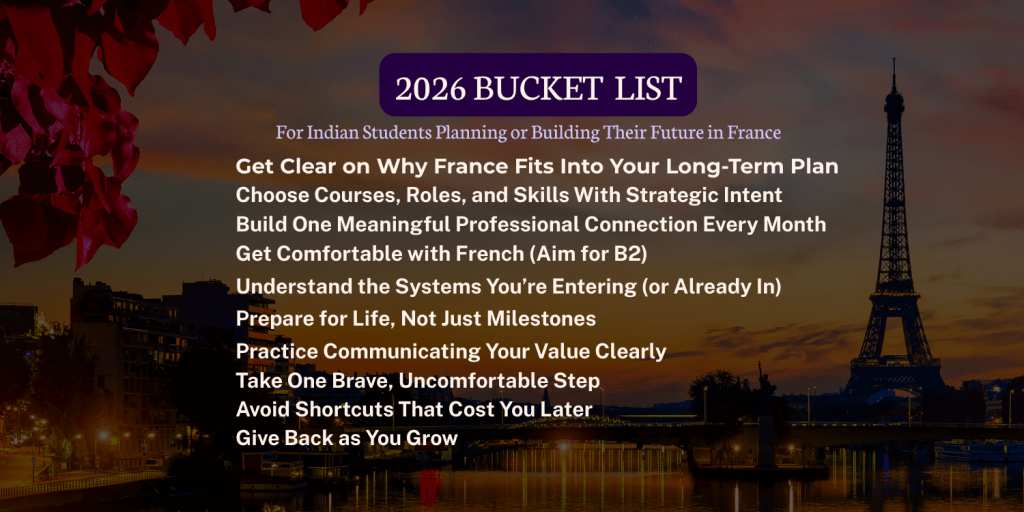
6. Prepare for Life, Not Just Milestones
Admissions and job offers are important—no doubt. But your ability to function well during the process also depends on foundational stability.
Plan and act on:
- Budget forecasting
- Housing applications
- Healthcare and insurance setup
- Student and work-related registrations
- Mental health and wellbeing routines
Students who balance practical life logistics with academic or career goals tend to navigate challenges with less stress and more resilience.
7. Practice Communicating Your Value Clearly
In both academic applications and job interviews, French institutions and employers look for clarity of thought, structure, and motivation. This means:
- Clear articulation of your goals
- Structured answers to interview questions
- Logical flow in SOPs and motivation letters
- Focus on skill relevance to the context
Practice helps. Mock interviews, written drafts, and feedback loops improve effectiveness over time.
8. Take One Brave, Uncomfortable Step
Progress rarely comes from comfort zones. This year, commit to one action that scares you a bit:
- A cold message to a recruiter
- Asking for feedback after a rejection
- Attending an event or conference alone
- Rewriting your SOP with real critique
These minor pushes often lead to disproportionate growth.
9. Avoid Shortcuts That Cost You Later
Shortcuts might look appealing—quick applications, unverified advisors, or rushed decisions. But one poor choice can cost months of time, money, or opportunities. Quality decisions come from:
- Verified information
- Real conversations
- Transparent processes
- Informed planning
Take your time to do it right.
10. Give Back as You Grow
As you learn, share. Helping someone just behind you reinforces your own learning and strengthens the community.
Answer questions, share resources, mentor juniors, and participate in forums. A strong community is a multiplying force for everyone.
France is not just an opportunity for growth. It’s a system – you enter it, learn its logic, and then make it work for you. 2026 can be a year of clarity, progress, and meaningful steps, but only if you plan with intention and execute with consistency.
Ask Sétu is here to support you through every phase—before arrival, during your studies, and as you build your career.

 Ask Sétu Blog
Leave a comment