

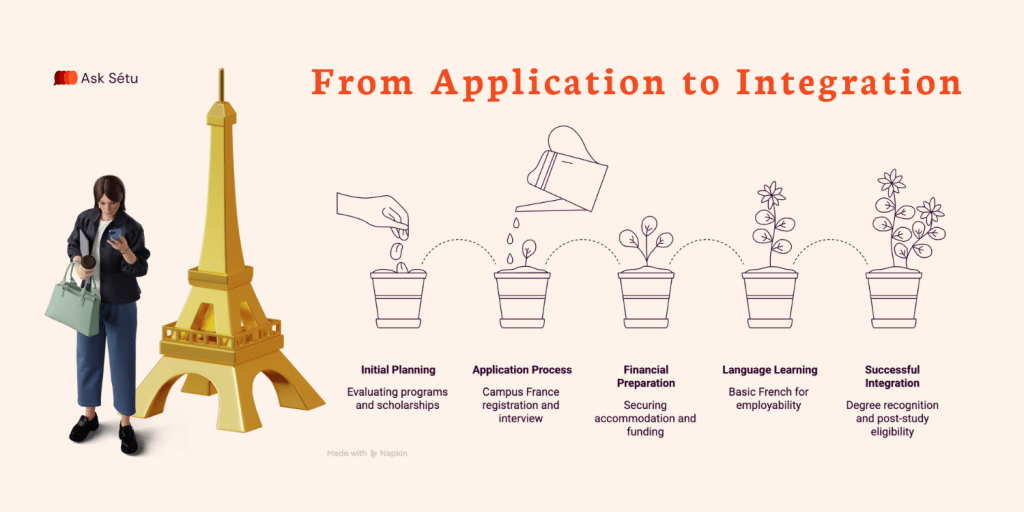
France continues to be one of the most attractive destinations for international students, offering world-class universities, comparatively affordable tuition, and strong post-study career opportunities within Europe. However, the process of studying in France involves several administrative and strategic steps that students and parents must begin preparing for well in advance. From registration procedures and financial documentation to scholarship applications and accommodation planning, early preparation significantly improves the chances of a smooth and successful transition.
Below are the most important steps prospective students and their families should focus on now.
Evaluate Degree Recognition and Career Outcomes
Not all programs offer the same recognition or post-study opportunities, so careful program selection is essential.
Before committing to a university or course, students should evaluate:
- International recognition of the degree
- Accreditation status of the institution
- Industry connections and internship opportunities
- Eligibility for post-study work permits
France currently offers favorable post-study options for international graduates, including the Temporary Resident Permit (APS), which allows graduates to remain in France while seeking employment.
However, eligibility can depend on factors such as degree level, institution type, and field of study. Students should verify these details carefully before finalizing their program choice.
Selecting a well-recognised program aligned with career goals can significantly improve employment prospects after graduation.
Apply for Scholarships Early
France offers several prestigious scholarship opportunities for international students, but these programs are highly competitive and have strict application timelines.
Two of the most prominent scholarships include:
Eiffel Excellence Scholarship
This program, funded by the French Ministry for Europe and Foreign Affairs, supports outstanding international students pursuing master’s and doctoral degrees. The scholarship covers a monthly stipend and additional benefits such as travel and health insurance.
Charpak Scholarship
Administered by the French Embassy in India, the Charpak program offers funding support for Indian students pursuing bachelor’s, master’s, or exchange programs in France.
Because scholarship deadlines often fall months before program start dates, students should begin researching and preparing their applications early. Strong academic records, well-written motivation letters, and clear career goals can significantly strengthen a candidate’s chances.
Prepare Financial Proof Carefully
A key requirement for obtaining a French student visa is demonstrating sufficient financial resources to support living expenses during the study period.
French immigration authorities typically require proof of at least €615 per month, which represents the estimated minimum cost of living for students in France. For a one-year program, this usually translates to approximately €7,380 in available funds.
Financial proof can be provided through several forms, including:
- Personal or parental bank statements
- Scholarship confirmation letters
- Sponsorship documentation
- Official financial guarantees
Students and parents should ensure that bank statements are recent, clearly formatted, and demonstrate consistent availability of funds. Sudden large deposits without explanation can raise concerns during the visa review process.
Careful preparation of financial documentation helps avoid delays or visa refusals.
Secure Accommodation Early
Housing is one of the most challenging aspects of studying in major French cities. Cities such as Paris, Lyon, and Toulouse experience high demand for student accommodation, especially at the start of the academic year.
Students should begin searching for housing as soon as they receive their admission confirmation. Common options include:
- University residences (CROUS housing)
- Private student residences
- Shared apartments
- Studio rentals
University housing is often the most affordable option, but spaces are limited and fill quickly. Private accommodation in major cities can also be expensive, making early planning essential. Parents may also need to assist with rental guarantees or financial documentation required by landlords.
Start Campus France Registration Early
One of the most critical first steps for students planning to study in France is registering with Campus France, the official French government agency responsible for managing international student admissions and documentation for many countries.
The Campus France procedure typically includes creating an online account, submitting academic records, selecting programs, and attending an interview with a Campus France advisor. Importantly, this interview stage must usually be completed before applying for a student visa.
Because processing timelines can vary and appointment slots fill quickly during peak application seasons, students should begin the Campus France registration process several months in advance. Early registration allows sufficient time to prepare academic documentation, clarify program requirements, and address any administrative issues before visa submission deadlines.
Parents should also ensure that students maintain accurate academic transcripts, degree certificates, and language test results, as these documents are essential during the evaluation process.
Begin Learning Basic French
Although many French universities now offer programs taught in English, learning basic French remains highly beneficial for students planning to live and work in the country.
Reaching a basic proficiency level (A1–A2) can greatly improve everyday communication, help students integrate into local communities, and increase employability in the French job market.
Employers in France often value candidates who demonstrate at least basic language capability, even in international companies where English is widely used.
Students can begin learning French through online courses, language apps, or local language institutes. Starting early allows them to build confidence before arriving in France.
Studying in France can be an immensely rewarding academic and cultural experience, but success depends heavily on careful preparation and early planning. By starting the Campus France process early, organizing financial documentation, applying for scholarships, evaluating program quality, learning basic French, and securing accommodation ahead of time, students can significantly reduce stress and improve their chances of a smooth transition.
For parents and students alike, proactive preparation is the key to turning the dream of studying in France into a well-planned and successful reality.

 Ask Sétu Blog
Leave a comment